
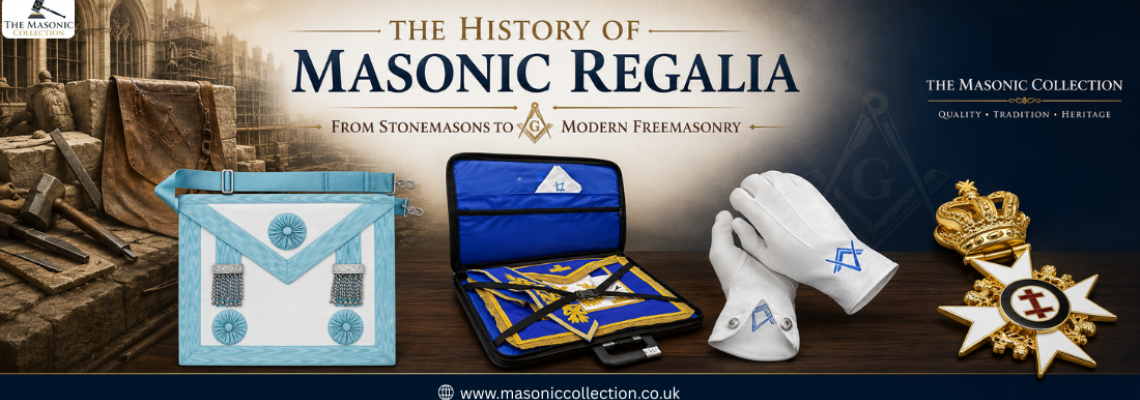
Walk into any Masonic lodge, and you'll immediately notice the aprons, collars, and jewels worn with pride. These aren't simply ceremonial items. Each piece tells part of the history of Masonic regalia, connecting today's Freemasons with the skilled operative masons who built remarkable cathedrals centuries ago. What began as practical clothing gradually evolved into meaningful symbols of honour, responsibility, and personal growth. As speculative Freemasonry developed, these traditions continued to grow, shaping the Masonic regalia worn today. In this guide, we'll explore the origins of Freemason regalia, trace its evolution through history, and discover why these timeless pieces remain an important part of Masonic tradition.
What Is Masonic Regalia and Why Does It Matter?
Before exploring the history of Masonic regalia, it's worth understanding what the term actually means. In simple terms, Masonic regalia refers to the ceremonial clothing and accessories worn by Freemasons during lodge meetings, official events, and degree ceremonies. Every piece has a purpose. It reflects a member's role, rank, achievements, or the Masonic order they belong to.
If you're new to Freemasonry and would like a complete introduction, read our guide on What Is Masonic Regalia? before exploring its fascinating history.
Unlike ordinary formal wear, Freemason regalia is steeped in symbolism. The colours, designs, and emblems aren't chosen for appearance alone. They represent values that have shaped the Craft for centuries, including integrity, wisdom, charity, and service. That's why Masonic regalia remains one of the strongest visual links between today's lodges and the traditions established generations ago.
Common Types of Masonic Regalia
At first glance, these items might seem decorative. Honestly, they're anything but. Every apron, collar, and jewel tells part of a much bigger story that stretches back to the days of stonemasons working on castles, churches, and cathedrals. Over time, practical workwear evolved into symbols that celebrate craftsmanship, personal development, and commitment to Masonic values.
Today, you'll also notice that different Masonic orders and offices wear distinctive regalia. From Master Mason regalia and Worshipful Master regalia to Grand Lodge regalia and Knights Templar regalia, each style reflects a unique place within the wider Masonic family while still honouring the traditions that shaped the Craft centuries ago.
Key Takeaways
Masonic regalia represents history, symbolism, and tradition rather than decoration alone.
Every piece, from Masonic aprons to Masonic collars and jewels, carries a specific meaning.
Different ranks, offices, and Masonic orders wear distinctive regalia to reflect their roles.
Modern regalia continues to preserve the heritage and values passed down through generations of Freemasons.
If you're interested in learning more about the meaning behind different pieces of regalia, our guide on what Masonic gifts, cufflinks, aprons, and custom regalia represent in Freemasonry explores the symbolism behind these ceremonial items and explains why they continue to play such an important role in the Craft.
This understanding makes it much easier to appreciate how Masonic regalia first began, and why a simple working apron became one of the most recognised symbols in Freemasonry.
The Origins of Masonic Regalia in Medieval Stonemasonry
The history of Masonic regalia begins in the Middle Ages, when operative masons travelled across Britain and Europe to build castles, churches, and magnificent cathedrals. Their work was physically demanding, and every tool and piece of clothing served a practical purpose.
One of the most important items was the leather apron. It protected stonemasons from sharp tools, rough stone, and dust during long hours of skilled craftsmanship. At this stage, the apron wasn't a symbol of rank or achievement. It was simply reliable workwear, designed for protection and durability.
As the trade developed, stonemasons became known for their skill, discipline, and commitment to quality. Their tools, including the square, compasses, and level, weren't just essential for construction. They also came to represent the values of precision, honesty, and fairness. These ideas would later inspire many of the Masonic symbols still recognised today.
Key Features of Early Masonic Regalia
Leather aprons were worn for protection while working with stone.
Practical clothing reflected the demands of the trade rather than status.
Working tools later inspired many well-known Masonic symbols.
The values of craftsmanship and integrity laid the foundations for modern Freemason regalia.
Although medieval stonemasons never wore the embroidered Masonic aprons, Masonic collars, or Masonic jewels seen today, their working attire became the starting point for the ceremonial regalia that continues to represent the traditions and heritage of Freemasonry.
From Operative Stonemasons to Speculative Freemasonry
By the late 1600s, Freemasonry was beginning to change. As the need for skilled operative masons declined, lodges gradually welcomed people who weren't professional stonemasons. These new members were drawn to the Craft for its moral teachings, shared values, and sense of brotherhood rather than the trade itself. This marked the beginning of speculative Freemasonry.
A major milestone came in 1717 with the formation of the first Grand Lodge in London. This helped organise Masonic practices and laid the foundations for the traditions followed by many lodges today. While the tools and clothing of stonemasons remained part of the Craft, their purpose evolved from practical use to symbolic meaning.
Operative vs Speculative Freemasonry
This shift transformed the history of Masonic regalia. The simple leather apron, once worn for protection, became a powerful symbol of honesty, humility, and commitment. As Freemasonry continued to grow, new forms of Masonic regalia, including collars, jewels, and ceremonial clothing, were introduced to represent different offices, degrees, and traditions.
The next step in that journey is perhaps the most fascinating of all: how the humble Masonic apron became the best-known symbol of Freemasonry.
Why the Masonic Apron Became Freemasonry's Most Recognised Symbol
Among all forms of Masonic regalia, the apron has remained the most recognisable and respected symbol of the Craft. Its origins may be practical, but over time it came to represent the principles that Freemasonry encourages its members to live by. Today, receiving a Masonic apron is an important milestone in a Freemason's journey.
The white apron is often associated with purity of character, honest labour, and equality. It serves as a reminder that every member begins their journey on equal footing, regardless of their background or profession. As a Freemason progresses through the degrees, the design of the apron may change to reflect new responsibilities, achievements, or offices held within the lodge.
According to the United Grand Lodge of England (UGLE), the apron is regarded as the "badge of a Mason" and remains one of the oldest and most meaningful symbols in Freemasonry. Its continued use reflects the strong connection between today's ceremonies and the traditions established centuries ago.
What Does the Masonic Apron Symbolise?
Purity through a commitment to moral character.
Honest labour inspired by the hardworking stonemasons of the past.
Equality, reminding members that everyone enters the Craft on the same level.
Personal growth as members progress through different degrees and offices.
Respect for tradition, preserving a symbol that has endured for centuries.
While the apron is the foundation of Freemason regalia, it is only one part of a much wider tradition. As Freemasonry expanded, different orders and offices introduced their own distinctive collars, jewels, and ceremonial dress, each reflecting a unique role within the Craft.
The Evolution of Masonic Regalia Through the Degrees
As Freemasonry grew, so did its ceremonial traditions. What began with a simple leather apron gradually developed into a wide range of Masonic regalia, reflecting different degrees, offices, and Masonic orders. While the purpose of regalia remained rooted in symbolism, its design became more detailed, with embroidered aprons, colourful collars, and finely crafted jewels representing a member's journey through the Craft.
Today, each order has its own distinctive style of regalia. From Master Mason regalia and Worshipful Master regalia to Grand Lodge regalia, every piece reflects a specific role and carries traditions that have been preserved for generations. Higher Masonic orders, including the Royal Arch, Knights Templar, Rose Croix, and the Royal Order of Scotland, also wear regalia that reflects their unique ceremonies and heritage.
The Evolution of Masonic Regalia
Examples of Masonic Regalia Across Different Orders
Master Mason regalia for members who have completed the Craft degrees.
Craft Grand Rank regalia and Grand Rank regalia for senior appointments.
Chapter Masonic regalia and Masonic Royal Arch regalia for Royal Arch companions.
Knights Templar regalia, Rose Croix regalia, and Red Cross of Constantine regalia for additional Masonic orders.
Royal Order of Scotland regalia and St Thomas of Acon regalia, each with distinctive ceremonial traditions.
Although styles vary between orders, the purpose remains the same. Every apron, collar, and jewel reflects commitment, service, and respect for the traditions that continue to shape Freemasonry today.
As Freemasonry expanded, different lodges and orders began developing regalia that reflected their own traditions and identities. Today, many lodges continue this practice through custom Masonic jewels, custom badges, and custom Masonic lodge banners, preserving their unique heritage while maintaining the standards of traditional Masonic craftsmanship.
How Modern Masonic Regalia Keeps Tradition Alive

Although centuries have passed since medieval stonemasons first wore leather aprons, the values behind Masonic regalia remain remarkably consistent. Today's regalia combines traditional craftsmanship with modern materials, allowing Freemasons to honour the history of the Craft while meeting the needs of contemporary lodge life.
While the history of Masonic regalia explains how these ceremonial items evolved, their importance extends far beyond tradition. Learn why Masonic regalia is important in Freemasonry and discover how aprons, collars, and jewels continue to represent honour, responsibility, and brotherhood in modern Masonic life.
Quality still matters. A well-made apron, collar, or jewel isn't just designed to look impressive during ceremonies. It's created to last for years and, in many cases, be passed down through generations. Fine embroidery, durable fabrics, and carefully finished metalwork all help preserve the dignity and heritage associated with Freemason regalia.
Modern Freemasonry also embraces personalisation while respecting long-standing traditions. Many lodges commission custom cufflinks and custom ties to represent their lodge identity, creating pieces that combine quality craftsmanship with meaningful symbolism.
How Modern Masonic Regalia Preserves Tradition
Handcrafted details inspired by historic designs.
Premium materials that offer durability and a professional finish.
Traditional colours and symbols that reflect Masonic values.
Carefully crafted Masonic aprons and collars for different ranks and orders.
High-quality Masonic collars and jewels that represent offices and achievements.
Whether someone is looking for Master Mason regalia, Worshipful Master regalia, Grand Lodge regalia, or regalia for orders such as the Royal Arch or Knights Templar, authenticity remains an important part of the Craft. Modern makers continue to respect centuries-old traditions while producing regalia that meets today's standards of quality and craftsmanship.
For Freemasons who value heritage and attention to detail, choosing well-crafted regalia is one way to honour the traditions that have shaped the Craft for generations. From beautifully made aprons to finely crafted jewels and accessories, every piece helps keep the rich history of Masonic regalia alive.
Preserving Masonic Regalia for Future Generations
Quality Masonic regalia is more than ceremonial clothing. It's a lasting reminder of a Freemason's journey, achievements, and commitment to the Craft. With the right care, items such as Masonic aprons, collars, and jewels can remain in excellent condition for many years and even become treasured family heirlooms.
Daily wear, dust, moisture, and direct sunlight can gradually affect fabrics, leather, and embroidery. A little care goes a long way in preserving both the appearance and historical value of your regalia.
Tips for Caring for Masonic Regalia
Simple Ways to Protect Your Regalia
Store aprons flat or hang them carefully to maintain their shape.
Use a dedicated regalia case when travelling to lodge meetings.
Avoid folding embroidered areas where possible.
Handle Masonic collars and jewels with clean hands to help preserve their finish.
Follow the manufacturer's care instructions for leather and fabric items.
Looking after ceremonial clothing also includes protecting personalised items. Whether it's a bespoke apron or a pair of custom gloves, proper storage and regular care help preserve both their appearance and the traditions they represent for future generations.
Looking after Masonic regalia isn't just about keeping it looking its best. It's about preserving a piece of Masonic history. Every well-maintained apron, collar, and jewel helps carry the traditions of Freemasonry forward, allowing future generations to appreciate the same craftsmanship and symbolism that have defined the Craft for centuries.
Final Thoughts
The history of Masonic regalia is a story of tradition, craftsmanship, and shared values that has evolved over hundreds of years. What began as practical clothing for operative masons has become a collection of meaningful symbols that connect modern Freemasons with the rich heritage of the Craft. From the simple leather apron to beautifully crafted collars and jewels, every piece reflects a journey built on integrity, service, and personal growth.
While the appearance of Freemason regalia has changed over time, its purpose has remained remarkably consistent. Whether it's Master Mason regalia, Grand Lodge regalia, or Knights Templar regalia, each item represents dedication to Masonic principles and respect for traditions that continue to unite lodges around the world.
For those looking to invest in quality Masonic regalia UK, choosing well-crafted aprons, collars, jewels, and accessories is about more than ceremonial dress. It's about preserving a legacy that stretches back to the medieval stonemasons whose skill and values laid the foundations of modern Freemasonry.
As the Craft continues to inspire new generations, Masonic regalia remains a lasting symbol of history, brotherhood, and pride. Explore The Masonic Collection range of Masonic regalia and accessories to find pieces that celebrate centuries of craftsmanship and carry these traditions forward with confidence.
Frequently Asked Questions
What is Masonic regalia?
Masonic regalia refers to the ceremonial clothing and accessories worn by Freemasons during lodge meetings and official ceremonies. It typically includes aprons, collars, jewels, gloves, and other items that represent a member's rank, office, or Masonic order. Each piece carries symbolic meaning and reflects the traditions of the Craft.
Why do Freemasons wear aprons?
Freemasons wear aprons because they symbolise purity, honest labour, and personal responsibility. The tradition dates back to medieval operative masons, who wore leather aprons to protect themselves while working with stone. Over time, the practical apron became one of the most important symbols in Freemasonry, representing moral values rather than manual work.
How has Masonic regalia changed over time?
The history of Masonic regalia shows a gradual evolution from simple protective clothing worn by stonemasons to ceremonial regalia used in modern Freemasonry. While the original leather apron inspired today's designs, embroidered aprons, collars, jewels, and other ceremonial items were introduced as the Craft developed and new degrees and Masonic orders emerged.
What do Masonic collars and jewels represent?
Masonic collars and jewels identify a Freemason's office, rank, or responsibilities within a lodge or Masonic order. Different designs are used for roles such as the Worshipful Master, lodge officers, and members of additional orders including the Royal Arch and Knights Templar.
How should Masonic regalia be stored?
To keep Masonic regalia in excellent condition, store it in a protective regalia case away from moisture, direct sunlight, and excessive heat. Clean aprons, collars, and jewels carefully using suitable materials and inspect them regularly to help preserve their appearance and craftsmanship.
Related Products


