
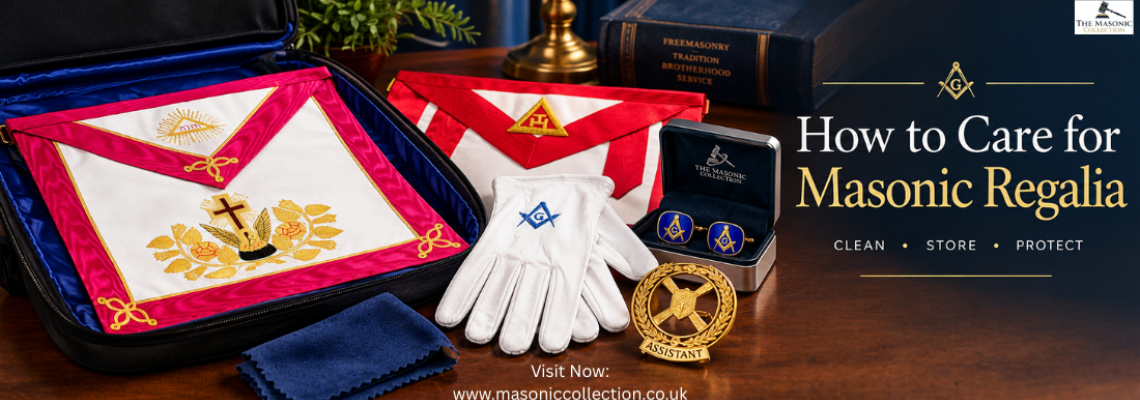
Masonic regalia is worn with pride, but it also needs proper care after the lodge meeting. Dust, stains, moisture, creases, and everyday handling can gradually affect its appearance, especially when pieces are stored carelessly. The good news is that looking after your regalia doesn't have to be difficult. With a few simple cleaning and storage habits, you can help keep your apron, gloves, jewels, and other pieces in good condition and ready for the next occasion. Whether you've owned your Masonic regalia for years or recently invested in new Freemason regalia, this guide explains how to clean, handle, store, and transport it properly.
Why Proper Care and Storage of Masonic Regalia Matters
Good Masonic regalia care isn't about spending hours cleaning and polishing everything after every meeting. It's about avoiding the small things that cause damage over time.
If you're still getting familiar with Masonic regalia and want to understand what the different pieces represent, our guide on what Masonic regalia is covers the basics before you get into caring for it.
Dust can settle into fabric and embroidery, while humidity can create an ideal environment for mildew. Regular exposure to sunlight can also fade colours and affect delicate decorative details. Then there are the everyday problems, such as stains, deep creases, and tarnishing on metal accessories.
This is why Masonic regalia storage matters just as much as cleaning. Putting everything away while it's damp, crushing an apron under other items, or leaving jewels loose in a drawer can undo all the care you've taken. The good news? Most of these problems are easy to prevent.
A quick inspection after each meeting, gentle cleaning when needed, and suitable storage can help protect your regalia and keep it looking smart for much longer.
How to Clean and Care for Masonic Regalia
Different types of Masonic regalia need different care depending on the material. In this section, we'll cover how to clean and care for Masonic regalia, including leather, cotton, silk, metals, gemstones, and decorative stones. With the right cleaning methods and gentle handling, you can help keep your regalia looking smart and well cared for.
Leather Masonic Regalia and Accessories
Leather needs a gentler approach than everyday fabric. Whether you're caring for Masonic leather gloves, a leather apron, or a soft regalia case, avoid vigorous scrubbing, excessive water, and direct heat. A little patience goes a long way.
Leather Gloves
Cleaning: For 100% soft leather gloves, hand washing is recommended. Use cool water with a mild soap and gently rub the surface to remove dirt or marks. Don't scrub hard, as this can affect the delicate leather.
Care: Once cleaned, let the gloves air dry naturally at room temperature. Keep them away from direct heat and sunlight while drying. When completely dry, apply a light leather conditioner to help maintain their softness and reduce the risk of cracking.
Leather Aprons

Cleaning: For a leather or faux leather Masonic apron, spot cleaning is the better option. Use a soft, damp cloth to gently wipe away dirt or marks rather than soaking the apron.
Care: If water is used during cleaning, allow the apron to dry naturally at room temperature. Avoid radiators, hairdryers, and direct sunlight, as excessive heat can damage the material. Periodic use of a suitable leather conditioner can also help maintain the material's suppleness and appearance.
Soft Leather Cases
Cleaning: For a faux leather Masonic regalia case, gently wipe the exterior with a soft, damp cloth to remove dust and dirt. Don't submerge the case in water, and don't wash, tumble dry, or iron it.
Care: Allow any moisture from cleaning to evaporate naturally. An occasional application of a gentle leather conditioner can help maintain the case's appearance and water resistance.
Cotton Masonic Regalia
Cotton is generally easier to maintain than delicate materials, but it still benefits from gentle washing and proper drying. The main priorities are mild cleaning, avoiding high heat, and keeping the fabric dry.
Cotton Masonic Gloves

Cleaning: White cotton gloves can be machine washed at 40°C using a gentle cycle and mild detergent.
Care: Avoid tumble drying, as air drying helps preserve the fabric and embroidered logo.
Cotton and Woven Ties
Cleaning: For a woven Masonic tie, hand wash it in cool water with mild soap. Gently clean the tie without rubbing too hard, then rinse carefully. Do not wring or twist the tie, as this can affect its shape. For machine washing, use a gentle cycle with cold water and mild detergent.
Fresh stains can be blotted gently with a damp cloth. For stubborn marks, professional dry cleaning can be considered.
Care: After washing, air-dry the tie flat or hang it naturally. Never tumble dry it. To help maintain its shape, store the tie on a tie rack or loosely rolled. If ironing is necessary, use low heat on the reverse side.
Cotton-Blend Socks
Cleaning: Cotton-blend socks can be machine washed at 40°C using a gentle or normal cycle with mild detergent. Wash them with similar dark colours to reduce the risk of colour transfer.
Care: Turning the socks inside out before washing helps protect the woven design. Air drying is preferable, while high-heat tumble drying should be avoided to help prevent shrinkage.
Gentle washing and natural drying are the simple habits that help cotton Masonic accessories stay fresh, comfortable, and presentable for longer.
Silk Masonic Regalia
Silk Masonic regalia needs gentle care to keep it looking smart and help it maintain its shape. For silk ties and bow ties, follow the care instructions for the specific item rather than using harsh cleaning methods.
Silk Ties

Cleaning: For a silk Masonic tie, turn the tie inside out before placing it in the washing machine. Use a gentle wash cycle and avoid bleach, as it can affect the fabric and its appearance.
Care: After washing, allow the tie to air dry naturally and avoid tumble drying. If it needs pressing, iron it on medium heat.
The tie's thick wool interlining, wrapped in cotton, helps it keep its shape and gives the knot and hang a better finish. With regular care, this helps the tie remain smart and presentable for lodge meetings and formal occasions.
Silk Bow Ties
Cleaning: A silk Masonic bow tie can be hand washed or dry cleaned, depending on the preferred cleaning method. Avoid rough handling during cleaning to help preserve its appearance.
Care: The 100% silk fabric, combined with thick cotton interlining, helps the bow tie maintain its shape and smart appearance. Proper cleaning and careful handling can help keep it looking sharp over time.
When caring for silk Masonic regalia, the main aim is simple: clean it carefully, avoid harsh treatments, and allow it to dry naturally where the care instructions recommend it.
Precious Metals

Precious metal Masonic jewellery should be cleaned gently to protect its finish and details.
Cleaning: Wipe silver pieces and gold-plated cufflinks with a soft, dry cloth after wearing to remove moisture and oils. A dedicated silver polishing cloth can help maintain the shine of silver, while a jewellery polishing cloth designed for gold-plated items can be used for cufflinks.
Care: Keep these pieces away from water, sweat, perfume, lotions, and harsh chemicals. Remove them before showering, swimming, or washing your hands, and avoid abrasive materials or harsh cleaning products.
This gentle approach helps maintain the finish and keeps engraved details looking crisp.
Gemstones and Decorative Stones

Masonic jewellery featuring gemstones and decorative stones needs gentle handling to preserve its finish and appearance.
Cleaning: For onyx and mother-of-pearl cufflinks, use a soft, dry jewellery or microfibre cloth to remove dust and fingerprints, and polish the rhodium-plated finish gently. Onyx cufflinks can also be polished with a jewellery polishing cloth to maintain their gold-plated finish.
For a Masonic ring, wipe it gently with a soft, dry cloth. A silver polishing cloth can be used for stubborn tarnish on the silver alloy finish. Avoid immersing any of these pieces in water or using harsh chemicals, abrasive materials, or aggressive scrubbing.
Care: Keep these pieces away from water, perfume, aftershave, lotions, and prolonged exposure to sweat. The vintage oxidised finish on some rings can naturally develop more character over time, which is part of its appearance.
How to Store Masonic Regalia Properly
Good Masonic regalia storage helps keep ceremonial pieces clean, presentable, and ready for your next meeting. Once your regalia has been cleaned, make sure each item is completely dry before putting it away.
For silk ties and bow ties, store them in a way that allows them to keep their shape. A tie can be stored on a suitable tie rack or loosely rolled rather than tightly folded. The bow tie should also be kept in a way that avoids unnecessary pressure on its shape.
For leather accessories such as Masonic gloves, aprons, and soft cases, choose a cool, dry storage area away from direct sunlight and excess moisture. Leather should be allowed to dry naturally before storage, while a suitable leather conditioner can help maintain its condition where recommended.
Cotton accessories, including gloves and socks, should also be completely dry before being stored. Keeping them somewhere cool and dry helps prevent dampness from affecting the fabric.
For Masonic jewels, cufflinks, and other smaller accessories, keep them protected rather than leaving them loose among other regalia. This helps reduce unnecessary contact and keeps your Masonic accessories organised.
If you have several pieces of ceremonial regalia, a dedicated Masonic regalia case can make storage and transport much easier. A suitable case gives your apron, ties, gloves and other accessories their own protected space, helping prevent unnecessary creasing, pressure and damage.
The key to effective Masonic regalia storage is simple: keep each item clean and completely dry, protect delicate materials, and store your regalia somewhere cool, dry and well organised.
How to Store a Masonic Apron Without Creasing It
A Masonic apron can easily develop stubborn creases if it's folded tightly or stored under heavy items. Handle it gently, keep embroidered areas protected, and avoid putting pressure on decorative details.
For better Masonic apron storage, make sure the apron is clean and completely dry before putting it away. A dedicated Masonic apron case can also help protect it from dust, crushing, and unnecessary creasing.
Give your apron proper space, and it'll be much easier to keep it looking smart.
Choosing a Masonic Regalia Case for Better Storage
A good Masonic regalia case gives your apron, gloves, and accessories a proper place between meetings. Look for enough room to keep everything protected without crushing or overcrowding the contents.
Compartments are especially useful for Masonic jewellery, jewels, and cufflinks, as they help prevent smaller pieces from rubbing against each other. A sturdy case can also make carrying your regalia easier when travelling.
Choose a case based on what you actually need to store. A case that's too small can cause creasing, while too much unused space can make it awkward to carry.
The right regalia case should make storage simpler, safer and more organised.
How to Transport Masonic Regalia Safely
Travelling with Masonic regalia needs a little care. Pack the apron so it isn't crushed, keep jewels and cufflinks secure, and give your gloves a clean, protected space.
Don't overfill your case, as too much pressure can cause creases or damage decorative details. Keep regalia away from excessive heat and moisture during the journey.
Pack carefully, and your regalia should arrive looking as smart as when you left home.
Common Masonic Regalia Care and Storage Mistakes
Most regalia damage doesn't happen because someone is deliberately careless. It usually comes from small habits that seem harmless at the time. The good news is that they're easy to avoid.
Storing regalia while it's damp: Always let your apron, gloves, or other fabric pieces dry completely before putting them away.
Using harsh cleaning products: Strong detergents, bleach, and abrasive cleaners can damage colours, fabrics, and decorative details.
Leaving regalia in direct sunlight: Prolonged exposure can cause colours and materials to fade.
Folding delicate pieces too tightly: Tight folds can leave stubborn creases, particularly around embroidered areas.
Overloading a storage case: Cramming too much inside can put unnecessary pressure on aprons and accessories.
Leaving metal accessories loose: Jewels and cufflinks can rub against each other and become scratched.
Ignoring small signs of damage: A loose thread, stain, or damaged fitting is easier to deal with early than after it has become a bigger problem.
Good regalia care is mostly about avoiding preventable mistakes. A few simple habits can keep your pieces looking smart and ready for the next meeting.
Caring for Custom Masonic Regalia
Custom Masonic regalia often includes detailed embroidery, personalised designs and decorative finishes, so it deserves the same careful treatment as any other well-made piece. In fact, the more detailed the regalia, the more reason there is to handle it gently.
Avoid rubbing embroidered areas too hard when cleaning, and don't use strong cleaning products unless you're certain they're suitable for the material. When storing custom pieces, keep them away from damp, direct sunlight, and anything that could snag or press against the decorative work.
If you've invested in custom Masonic regalia, proper storage is a simple way to protect that investment. A suitable regalia case can also help keep personalised pieces organised and protected between meetings.
If you're looking for personalised pieces for your own Masonic needs, you can explore Custom Masonic Regalia from The Masonic Collection.
Masonic Regalia Care Routine: What to Do and When
You don't need to spend hours caring for your regalia. A simple routine after each meeting can keep everything in good shape and make problems much easier to spot.
The key is consistency. You don't have to deep-clean your regalia after every use. A quick check, careful handling and proper storage will go a long way.
And if you spot a problem, deal with it early. A small stain or loose thread is much easier to sort out now than the night before an important lodge meeting.
Stay Connected With Masonic News
Looking after your regalia is easier when you're prepared for the occasions when you'll need it. Keeping up with Masonic news and updates can also help you stay aware of what's happening within the wider Masonic community.
If you'd like to hear about new products, Masonic Collection updates, and other news, you can sign up for the Masonic Collection newsletter.
Stay in the loop, and you'll have one less thing to catch up on later.
Check the Latest Masonic Promotions
If your regalia, gloves, accessories, or storage case are starting to show their age, it may be worth checking what's available before replacing anything. There’s no need to rush into a purchase, especially when a suitable offer could make the next replacement a little easier on the pocket.
The Masonic Collection regularly features offers across selected products, so have a look at the latest Masonic promotions before making your next purchase.
Keep Your Masonic Regalia Looking Its Best
Masonic regalia is made to be worn and enjoyed, so looking after it shouldn't feel like a chore. Clean pieces carefully, handle delicate details with care,e and give everything a proper place to rest between meetings.
Keep your regalia dry, protect it from direct sunlight, and avoid cramming it into unsuitable storage. Check for stains or damage from time to time, and deal with small problems before they become harder to fix.
A good masonic regalia case can make storage much easier, while a simple care routine helps protect aprons, gloves, jewels, and other accessories for longer.
Look after your regalia today, and it'll be ready to look its best when you need it next.
Frequently Asked Questions About Masonic Regalia Care
How do you clean Masonic regalia?
The best way to clean Masonic regalia depends on its material. Leather, cotton, silk, metals, gemstones, and decorative stones all need different cleaning methods. Use gentle cleaning methods suitable for the material and avoid harsh chemicals, aggressive scrubbing, and excessive heat.
How do you clean a leather Masonic apron?
A leather or faux leather Masonic apron should be spot cleaned with a soft, damp cloth. Gently wipe away dirt or marks rather than soaking the apron. Allow it to dry naturally at room temperature and keep it away from radiators, hairdryers, and direct sunlight.
How do you clean Masonic leather gloves?
100% soft leather Masonic gloves should be hand washed using cool water and mild soap. Gently rub the surface to remove dirt or marks without vigorous scrubbing. After cleaning, allow the gloves to air dry naturally at room temperature.
Can Masonic cotton gloves be machine washed?
Yes. White cotton Masonic gloves can be machine washed at 40°C using a gentle cycle and mild detergent. Avoid tumble drying and allow them to air dry naturally to help preserve the fabric and embroidered logo.
How should silk Masonic ties be cleaned?
Silk Masonic ties should be cleaned according to their specific care instructions. The silk tie covered in this guide can be machine washed inside out with like colours. Do not use bleach, avoid tumble drying, and use medium heat if ironing is needed.
Can a silk Masonic bow tie be washed?
Yes. A silk Masonic bow tie can be hand washed or dry cleaned. Handle it gently during cleaning and avoid rough treatment to help preserve its appearance and shape.
What should you avoid when cleaning Masonic regalia?
Avoid harsh chemicals, abrasive materials, aggressive scrubbing, excessive water, and direct heat. For jewellery and decorative stones, also avoid prolonged contact with water, perfume, lotions, and other chemicals. Always use a cleaning method suitable for the specific material.
How often should Masonic regalia be cleaned?
The blog does not specify a fixed cleaning schedule. Instead, clean Masonic regalia when it needs attention, using the appropriate method for its material. Gentle, regular care can help keep aprons, gloves, ties and jewellery looking smart and well cared for.
Can all Masonic regalia be cleaned in the same way?
No. Masonic regalia should be cleaned according to its material. Leather may need hand washing or spot cleaning, cotton can often be machine washed, silk requires gentler treatment, while metals and gemstones are generally cleaned with suitable soft cloths. Using the wrong cleaning method can affect the material or finish.
Related Products


